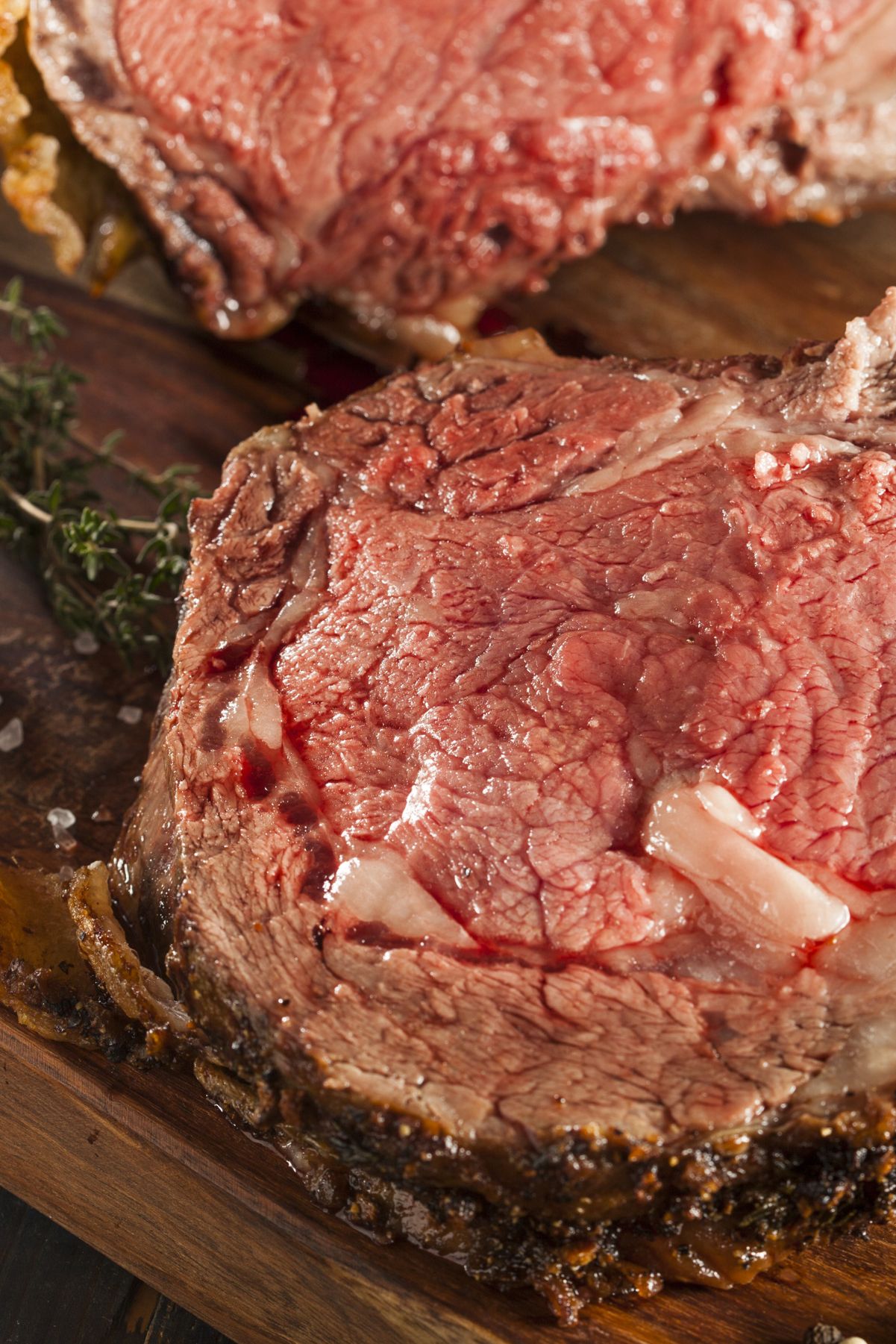
Christmas Prime Rib Roast with Au Jus
Christmas Prime Rib Roast with Au Jus is a classic holiday dinner with tender, juicy beef, a seasoned crust, and homemade au jus.
Equipment
Ingredients
- 1 bone-in prime rib roast (approximately 5 to 6 pounds)
- 2 tablespoon olive oil
- 1 tablespoon kosher salt
- 2 tablespoon black pepper coarsely ground
- 1 teaspoon onion powder
- 1 teaspoon dry mustard powder
- 1 medium yellow onion quartered
- 2 cups low sodium beef broth divided
- ½ cup dry red wine
- 1 tablespoon Worcestershire sauce
- ½ teaspoon ground black pepper
- salt to taste
Instructions
- Remove the prime rib roast from the refrigerator 1 hour before cooking to take some of the chill off.
- Preheat the oven to 450°F.
- Pat the roast dry with paper towels, then rub olive oil over the entire surface.
- In a small mixing bowl, stir together the kosher salt, 2 teaspoons coarsely ground black pepper, onion powder, and dry mustard powder.
- Rub the seasoning mixture evenly over the roast.
- Place the quartered onion in the bottom of a large roasting pan and add ½ cup beef broth.
- Position the roasting rack over the onions, then place the prime rib on the rack with the bones facing down and the fat side facing up.
- Roast at 450°F for 20 minutes.
- Reduce the oven temperature to 325°F and continue roasting for approximately 1 hour 30 minutes to 2 hours, depending on the size of the roast.
- Insert an instant-read thermometer into the thickest part of the meat without touching the bone. For medium-rare, remove the roast at 120°F to 125°F. For medium, remove it at 130°F to 135°F. The internal temperature will continue rising as the meat rests. The USDA recommends cooking beef roasts to 145°F with at least a 3-minute rest.
- Transfer the roast to a large cutting board, cover loosely with aluminum foil, and let it rest for 20 to 30 minutes before carving.
- While the roast rests, pour the liquid from the roasting pan through a fine-mesh strainer into a fat separator or heatproof container.
- Discard the cooked onions and remove most of the fat from the drippings.
- Transfer the reserved meat juices to a medium saucepan over medium heat.
- Add the red wine and simmer for 3 to 4 minutes to reduce slightly.
- Add the remaining 1½ cups beef broth, Worcestershire sauce, and ½ teaspoon ground black pepper.
- Bring to a gentle boil, reduce the heat to medium-low, and simmer for 8 to 10 minutes.
- Taste the au jus and add salt if needed.
- Carefully remove the rib bones from the rested roast by cutting along the bones.
- Slice the prime rib against the grain into approximately ½-inch to ¾-inch thick slices.
- Arrange the sliced prime rib on a serving platter and serve with the warm au jus on the side.
Notes
Tips and Tricks
Choose the Right Roast – A 5 to 6-pound bone-in prime rib roast serves approximately eight people, depending on the amount of bone and fat. Ask your butcher for a roast with good marbling. Use a Meat Thermometer – Cooking time is only a guide. Checking the internal temperature is the most reliable way to monitor doneness, especially with an expensive cut of beef. Watch the Pan Drippings – Check the roasting pan during cooking. If the liquid evaporates and the onions begin to burn, add a small amount of water to the pan. Don't Skip the Rest – Resting allows the juices to redistribute through the meat. Cutting too soon can leave more juice on the cutting board instead of in the beef. Save the Bones – The rib bones can be saved for making homemade beef stock. Refrigerate them promptly or freeze them for later. Serve the Au Jus Separately – A small gravy boat or serving bowl lets everyone add as much warm au jus as they like without soaking the roast.Storing and Reheating
Refrigerating – Place leftover prime rib in an airtight container and refrigerate within 2 hours of serving. Store for up to 3 to 4 days. Storing Au Jus – Refrigerate the au jus separately in a covered container for up to 3 to 4 days. Freezing – Wrap individual portions of prime rib tightly and place in freezer-safe containers or bags. Freeze for 2 to 3 months for the best quality. The au jus can also be frozen separately. Reheating Prime Rib – Place sliced beef in a covered baking dish with a little beef broth or au jus. Warm in a 250°F oven to help prevent drying. For food safety, reheat leftovers to 165°F. Reheating Au Jus – Heat in a small saucepan over medium-low heat, stirring occasionally, until thoroughly hot. Bring the sauce to a boil when reheating leftovers. Using Leftovers – Leftover prime rib works great in beef sandwiches, breakfast hash, or a hearty beef and potato soup.Nutrition
Calories: 906kcalCarbohydrates: 3gProtein: 40gFat: 79gSaturated Fat: 32gPolyunsaturated Fat: 3gMonounsaturated Fat: 35gCholesterol: 171mgSodium: 1137mgPotassium: 809mgFiber: 1gSugar: 1gVitamin A: 11IUVitamin C: 1mgCalcium: 36mgIron: 4mg
Follow us on Pinterest@nestinglanehealthy