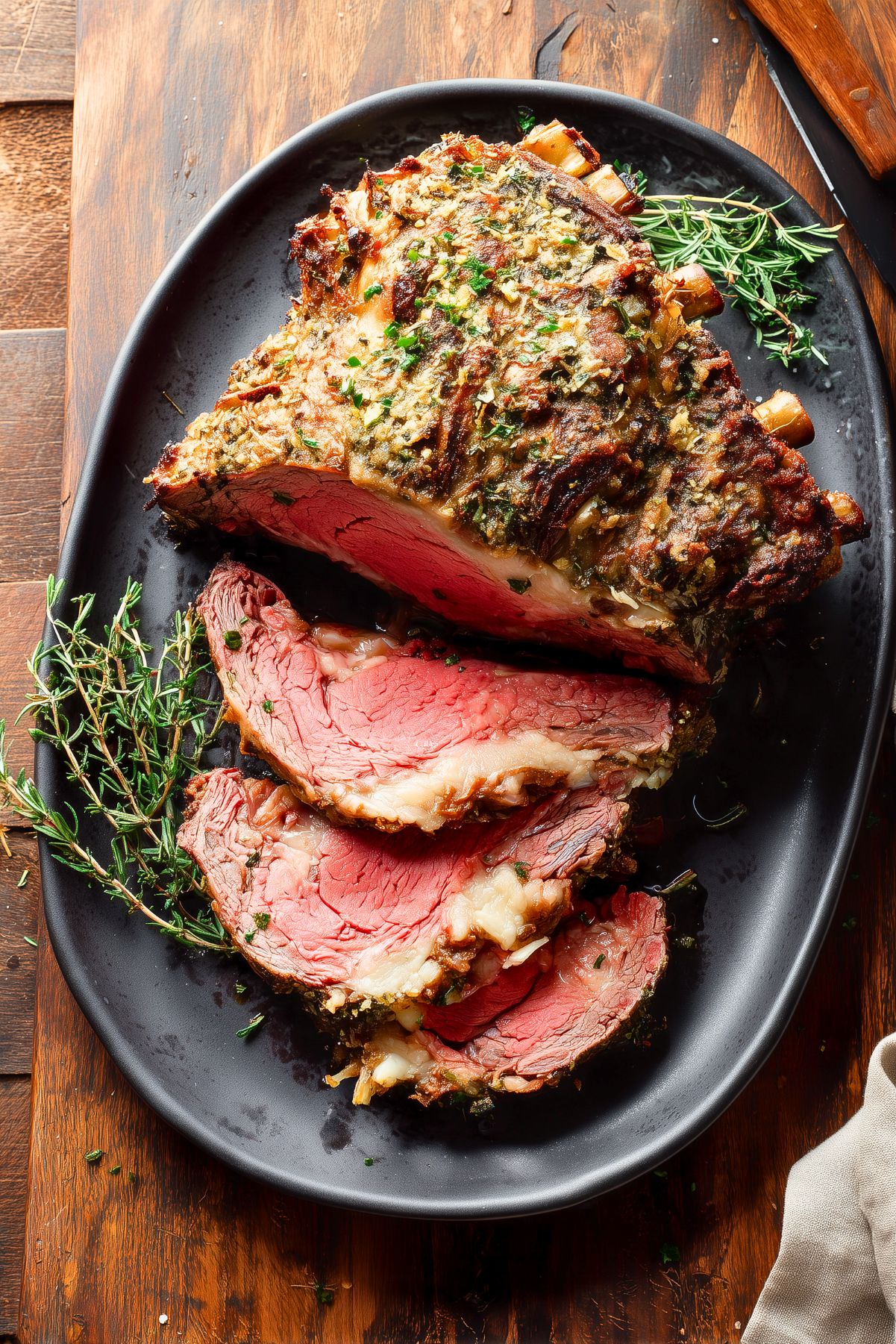
Garlic Herb Butter Prime Rib Roast
Garlic Herb Butter Prime Rib Roast is a high protein holiday dinner with a tender center and buttery herb crust. Perfect for Christmas dinner.
Equipment
Ingredients
- 4 pound boneless prime rib roast
- ½ cup unsalted butter softened
- 5 cloves garlic minced
- 2 tablespoon fresh rosemary finely chopped
- 2 tablespoon fresh thyme finely chopped
- 1 tablespoon fresh parsley finely chopped
- 2 teaspoon kosher salt
- 1 teaspoon fresh ground black pepper
- 1 teaspoon onion powder
- 1 tablespoon olive oil
Instructions
- Remove the prime rib roast from the refrigerator 1 hour before cooking to take some of the chill off.
- Preheat the oven to 450°F.
- Place a roasting rack inside a large roasting pan.
- Pat the prime rib dry with paper towels.
- In a small bowl, mix the softened butter, garlic, rosemary, thyme, parsley, kosher salt, black pepper, and onion powder until evenly blended.
- Rub the olive oil over the entire roast.
- Spread the garlic herb butter over the top and sides of the roast.
- Place the roast fat-side up on the roasting rack.
- Roast at 450°F for 15 minutes.
- Reduce the oven temperature to 325°F without opening the oven door.
- Continue roasting for approximately 1 hour 30 minutes to 2 hours, checking the internal temperature with a meat thermometer. Begin checking early since cooking time depends on the roast's thickness.
- For medium-rare, remove the roast when the internal temperature reaches 125°F to 130°F. For medium, remove it at 135°F to 140°F.
- Transfer the roast to a cutting board and loosely cover it with aluminum foil.
- Rest for 20 to 30 minutes. The internal temperature will continue to rise during this time.
- Remove the foil and slice the prime rib against the grain into thick slices.
- Spoon the accumulated pan juices over the sliced prime rib before serving.
Food Safety Note: The USDA recommends cooking beef roasts to 145°F (followed by a 3-minute rest). The lower temperatures in this recipe reflect traditional prime rib doneness and fall below that guideline, which may increase the risk of foodborne illness.
Notes
Tips and Tricks
Use a Meat Thermometer – Prime rib is an expensive cut of beef, so a meat thermometer is especially helpful. Check the temperature in the thickest part without touching the roasting rack. Watch the Thickness – Two roasts with the same weight can cook at different speeds. A thicker roast may need more time, so start checking the temperature before the estimated cooking time ends. Keep the Fat Side Up – The fat helps keep the roast moist during cooking. Leave the fat cap in place until after roasting. Don't Skip the Rest – Resting gives the juices time to settle before slicing. Cutting the roast too early can leave more of those delicious juices on the cutting board. Save the Pan Juices – The juices collected in the roasting pan have plenty of beef and herb flavor. Spoon them over the sliced meat or serve them on the side.Storing and Reheating
Refrigerating – Store leftover prime rib in an airtight container in the refrigerator for up to 3 to 4 days. Refrigerate within 2 hours of cooking. Freezing – Wrap individual portions tightly in plastic wrap, then place them in a freezer-safe container or freezer bag. Freeze for up to 3 months for the best quality. Thawing – Transfer frozen prime rib to the refrigerator and allow it to thaw overnight before reheating. Reheating in the Oven – Place leftover slices in a baking dish with a little beef broth or reserved pan juices. Cover with aluminum foil and warm in a 250°F oven until heated through. For food safety, reheat leftovers to 165°F. Reheating in a Skillet – Place thin slices in a skillet with a little beef broth over low heat. Cover and warm gently, checking that the meat reaches 165°F.Nutrition
Calories: 800kcalCarbohydrates: 2gProtein: 31gFat: 74gSaturated Fat: 33gPolyunsaturated Fat: 3gMonounsaturated Fat: 31gTrans Fat: 0.5gCholesterol: 168mgSodium: 685mgPotassium: 535mgFiber: 0.5gSugar: 0.05gVitamin A: 496IUVitamin C: 4mgCalcium: 36mgIron: 4mg
Follow us on Pinterest@nestinglanehealthy