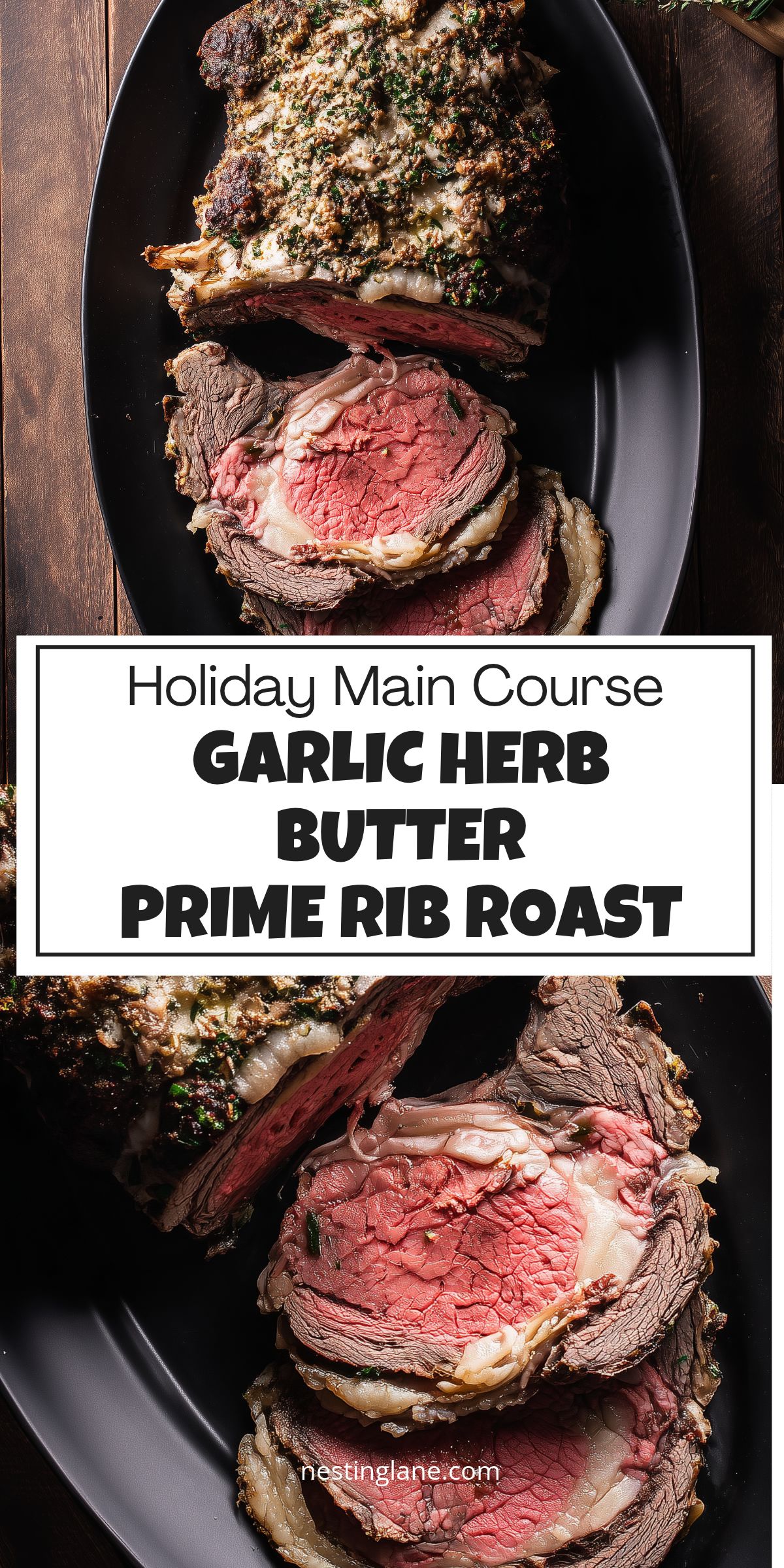
Garlic Herb Butter Prime Rib Roast is a delicious choice when you want to serve a special dinner without spending the entire day working in the kitchen.
Christmas dinner, New Year’s Eve, or a holiday meal with family are all great reasons to make this tender, juicy beef roast.
Prime rib can seem a little intimidating, especially when you’re cooking an expensive cut of beef. But this recipe keeps things easy. A generous coating of garlic herb butter gives the outside a beautiful browned crust, and the meat stays tender and juicy inside.
You’ll need a large roasting pan with a rack to cook the beef evenly. A good meat thermometer is also important because it helps you know exactly when the roast is ready. No guessing and hoping you’ve cooked it long enough.
Most of the cooking time is hands-off, so you can prepare your side dishes while the beef roasts. With eight servings, there’s enough for a family holiday dinner, and any leftovers are delicious in sandwiches or breakfast hash the next day.
Serve this garlic butter prime rib with mashed potatoes, roasted vegetables, or a simple salad for a wonderful holiday meal.
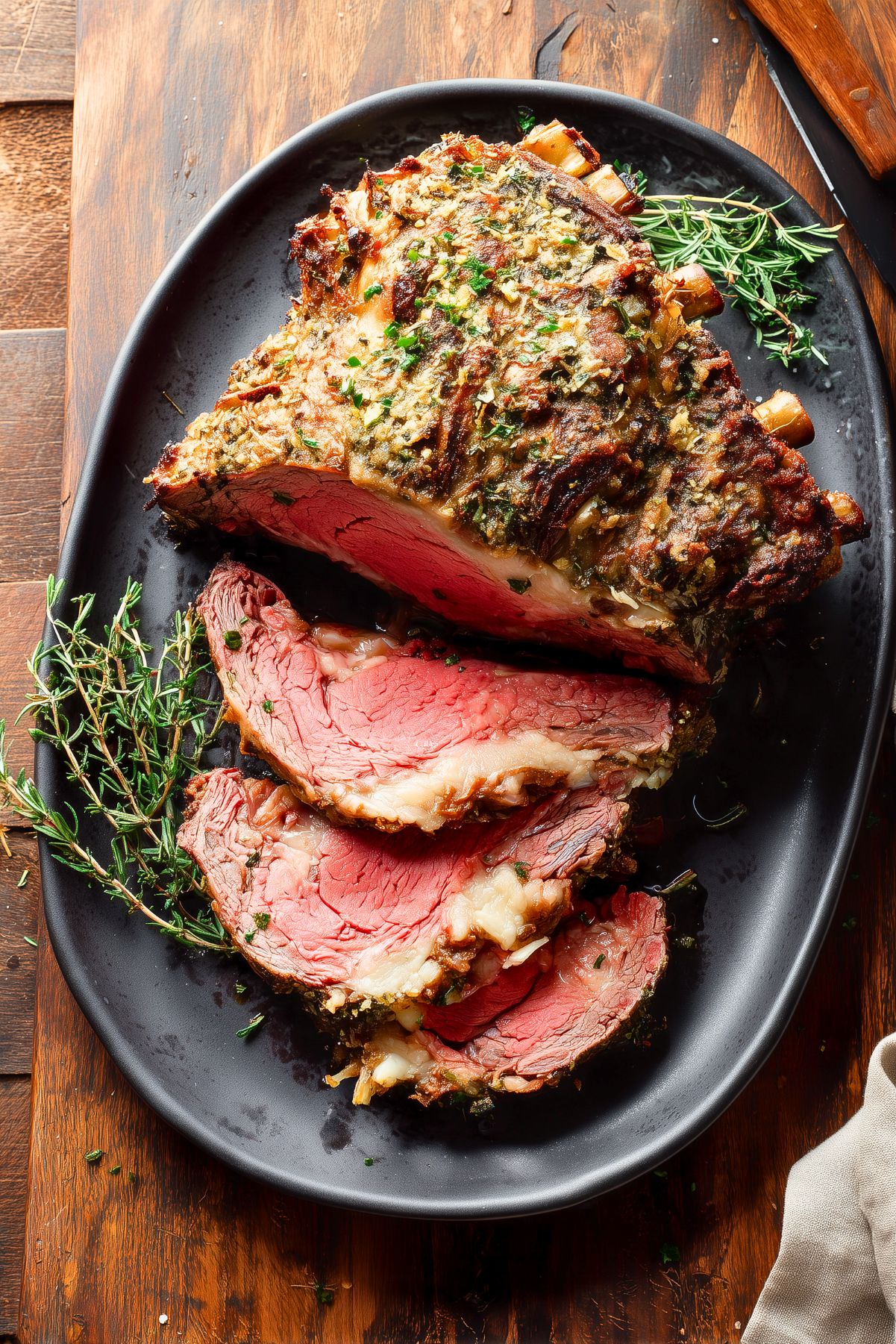
Why You’ll Love This Garlic Herb Butter Prime Rib Roast
Perfect for Christmas Dinner
Prime rib makes a beautiful main course for Christmas or another special holiday meal. It serves eight, so you can plan a nice family dinner without cooking several different main dishes.
Rich Garlic Herb Butter Crust
The combination of garlic, rosemary, thyme, and butter gives the roast a savory crust with plenty of flavor. Every slice has that delicious seasoned outer edge.
Easy to Cook to Your Preferred Doneness
You can prepare this roast medium-rare or medium, depending on how you prefer your beef. Using a meat thermometer makes it easier to reach your preferred temperature without overcooking.
Plenty of Protein
Each serving provides approximately 31 grams of protein. Pair your prime rib with your favorite vegetables and potatoes for a satisfying dinner.
Delicious Leftovers
Leftover prime rib is almost as exciting as the original dinner. Use thin slices for roast beef sandwiches, add chopped beef to a breakfast hash, or make a hearty steak and potato soup.
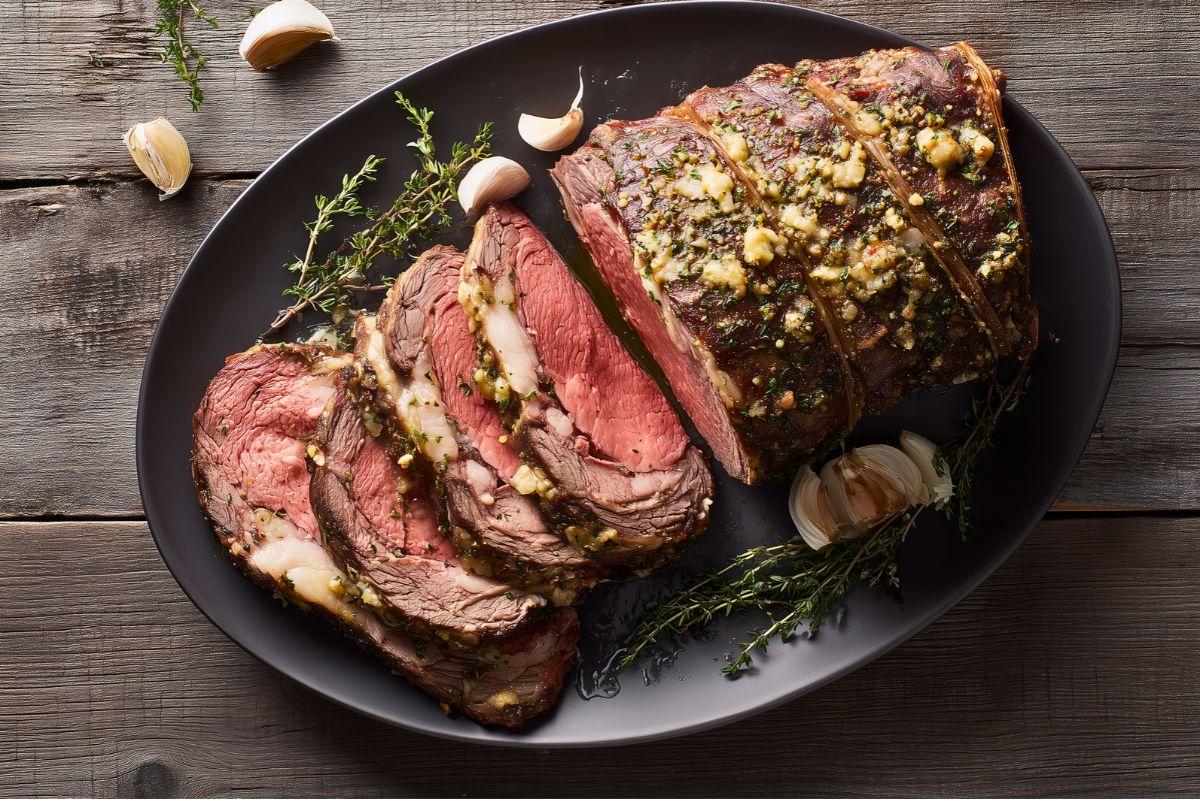
Ingredient Substitutions
Boneless Prime Rib Roast
A bone-in prime rib roast works great if that’s what you have. The cooking time may be different, so use a meat thermometer to check for doneness.
Unsalted Butter
Salted butter can replace unsalted butter. Reduce the added kosher salt slightly to account for the salt already in the butter.
Fresh Rosemary
Dried rosemary works in place of fresh. Use about 2 teaspoons of dried rosemary instead of 2 tablespoons fresh.
Fresh Thyme
Replace the fresh thyme with 2 teaspoons of dried thyme. It’s a handy option when fresh herbs aren’t available.
Fresh Parsley
Use 1 teaspoon of dried parsley instead of the fresh parsley. You can also leave it out if necessary.
Kosher Salt
Fine sea salt can replace kosher salt, but you’ll need less because the grains are smaller. Start with about 1 teaspoon and adjust to your preference.
Olive Oil
Avocado oil is a good substitute for olive oil. It works great for coating the roast before adding the garlic herb butter.
Affiliate Disclosure: Some links may be affiliate links where I make a small commission if you purchase anything after clicking a link. There is no additional cost to you. As an Amazon Associate I earn from qualifying purchases.
Garlic Herb Butter Prime Rib Roast
Equipment
Ingredients
- 4 pound boneless prime rib roast
- ½ cup unsalted butter softened
- 5 cloves garlic minced
- 2 tablespoon fresh rosemary finely chopped
- 2 tablespoon fresh thyme finely chopped
- 1 tablespoon fresh parsley finely chopped
- 2 teaspoon kosher salt
- 1 teaspoon fresh ground black pepper
- 1 teaspoon onion powder
- 1 tablespoon olive oil
Instructions
- Remove the prime rib roast from the refrigerator 1 hour before cooking to take some of the chill off.
- Preheat the oven to 450°F.
- Place a roasting rack inside a large roasting pan.
- Pat the prime rib dry with paper towels.
- In a small bowl, mix the softened butter, garlic, rosemary, thyme, parsley, kosher salt, black pepper, and onion powder until evenly blended.
- Rub the olive oil over the entire roast.
- Spread the garlic herb butter over the top and sides of the roast.
- Place the roast fat-side up on the roasting rack.
- Roast at 450°F for 15 minutes.
- Reduce the oven temperature to 325°F without opening the oven door.
- Continue roasting for approximately 1 hour 30 minutes to 2 hours, checking the internal temperature with a meat thermometer. Begin checking early since cooking time depends on the roast’s thickness.
- For medium-rare, remove the roast when the internal temperature reaches 125°F to 130°F. For medium, remove it at 135°F to 140°F.
- Transfer the roast to a cutting board and loosely cover it with aluminum foil.
- Rest for 20 to 30 minutes. The internal temperature will continue to rise during this time.
- Remove the foil and slice the prime rib against the grain into thick slices.
- Spoon the accumulated pan juices over the sliced prime rib before serving.
Notes
Tips and Tricks
Use a Meat Thermometer – Prime rib is an expensive cut of beef, so a meat thermometer is especially helpful. Check the temperature in the thickest part without touching the roasting rack. Watch the Thickness – Two roasts with the same weight can cook at different speeds. A thicker roast may need more time, so start checking the temperature before the estimated cooking time ends. Keep the Fat Side Up – The fat helps keep the roast moist during cooking. Leave the fat cap in place until after roasting. Don’t Skip the Rest – Resting gives the juices time to settle before slicing. Cutting the roast too early can leave more of those delicious juices on the cutting board. Save the Pan Juices – The juices collected in the roasting pan have plenty of beef and herb flavor. Spoon them over the sliced meat or serve them on the side.Storing and Reheating
Refrigerating – Store leftover prime rib in an airtight container in the refrigerator for up to 3 to 4 days. Refrigerate within 2 hours of cooking. Freezing – Wrap individual portions tightly in plastic wrap, then place them in a freezer-safe container or freezer bag. Freeze for up to 3 months for the best quality. Thawing – Transfer frozen prime rib to the refrigerator and allow it to thaw overnight before reheating. Reheating in the Oven – Place leftover slices in a baking dish with a little beef broth or reserved pan juices. Cover with aluminum foil and warm in a 250°F oven until heated through. For food safety, reheat leftovers to 165°F. Reheating in a Skillet – Place thin slices in a skillet with a little beef broth over low heat. Cover and warm gently, checking that the meat reaches 165°F.Nutrition
Find the kitchen tools, cooking essentials, and everyday products I use and recommend in my Amazon Storefront.
You May Also Like:
- Vanilla Chai Overnight Oats
- High Protein Cajun Chicken Soup
- Winter Chicken Chopped Salad
- Leftover Prime Rib and Potato Soup
- Cinnamon Apple Raisin Protein Balls